Ayodhya is one of India's oldest living cities — and one of its most misunderstood. Most visitors arrive for the Ram Janmabhoomi Mandir, spend a few hours, and leave. But Ayodhya is a city that rewards those who slow down, step off the main road, and allow themselves to be surprised.
We've spent time here — at Ramta, our boutique hotel Ayodhya a minute from the temple — and these are the 12 things we genuinely believe are worth your time in Ayodhya.
1. Ram Janmabhoomi Mandir — The Sacred Centre
The newly inaugurated Ram Janmabhoomi Mandir is the spiritual anchor of Ayodhya and one of the most significant temples built in modern India. The complex is architecturally breathtaking — stone carvings of Ramayana scenes, a towering shikhara, and an overwhelming stillness inside that contrasts beautifully with the energy outside.
✦ Avarna Tip
Go before 8 AM for the morning aarti. The darshan line is manageable, the light is stunning, and the bells and chants are the most immersive way to start a day in Ayodhya.
2. Sarayu Ghat — Sunrise Aarti on the Holy River
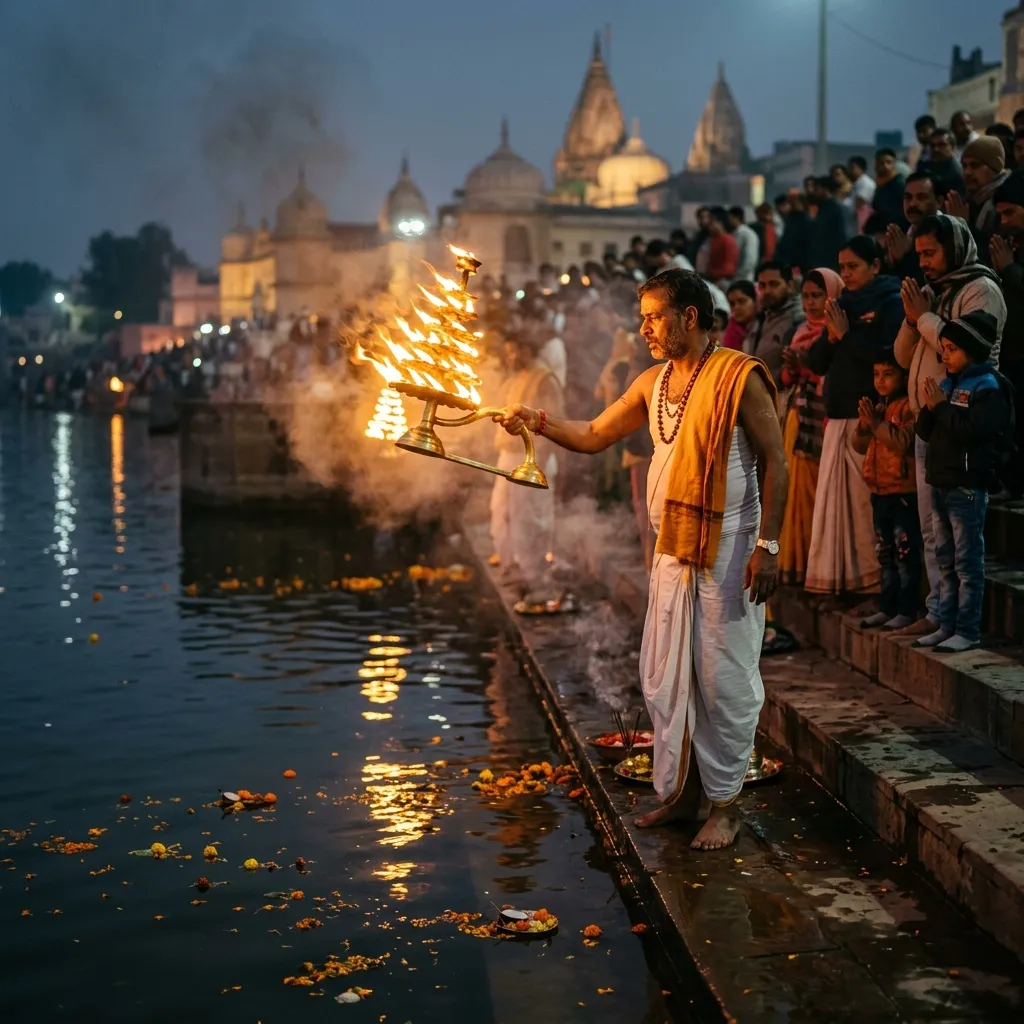
The Sarayu river is not just a body of water in Ayodhya — it's a living, breathing part of the city's identity. Every morning at sunrise, priests conduct the Sarayu Aarti with brass lamps, marigolds, and Sanskrit hymns. The reflection of fire on moving water, with the city quietly waking around you, is one of those rare travel moments that doesn't need a photograph to be remembered.
Our guests consistently tell us this is the single most powerful experience of their Ayodhya visit. We've built it into our curated experiences at Ramta — departing at 5 AM with a local guide.
3. Kanak Bhavan — A Temple of Love
Most visitors skip Kanak Bhavan because it's not on the main tourist circuit. This is a mistake. Kanak Bhavan is dedicated to Ram and Sita and is believed to be the palace that Kaikeyi gifted to Sita as a wedding present. The interiors are golden, warm, and deeply emotional — the kind of temple that moves people who didn't expect to be moved.
4. Hanuman Garhi — The Protector's Fort
Perched on a hillock in the heart of Ayodhya, Hanuman Garhi is a 10th-century temple dedicated to Lord Hanuman. The 76-step climb is rewarded with panoramic views of the old city and a deeply atmospheric sanctum. This is the city's most beloved temple after the Ram Mandir — locals visit every Tuesday and Saturday without fail.
5. Old City Lanes — Where Ayodhya Actually Lives
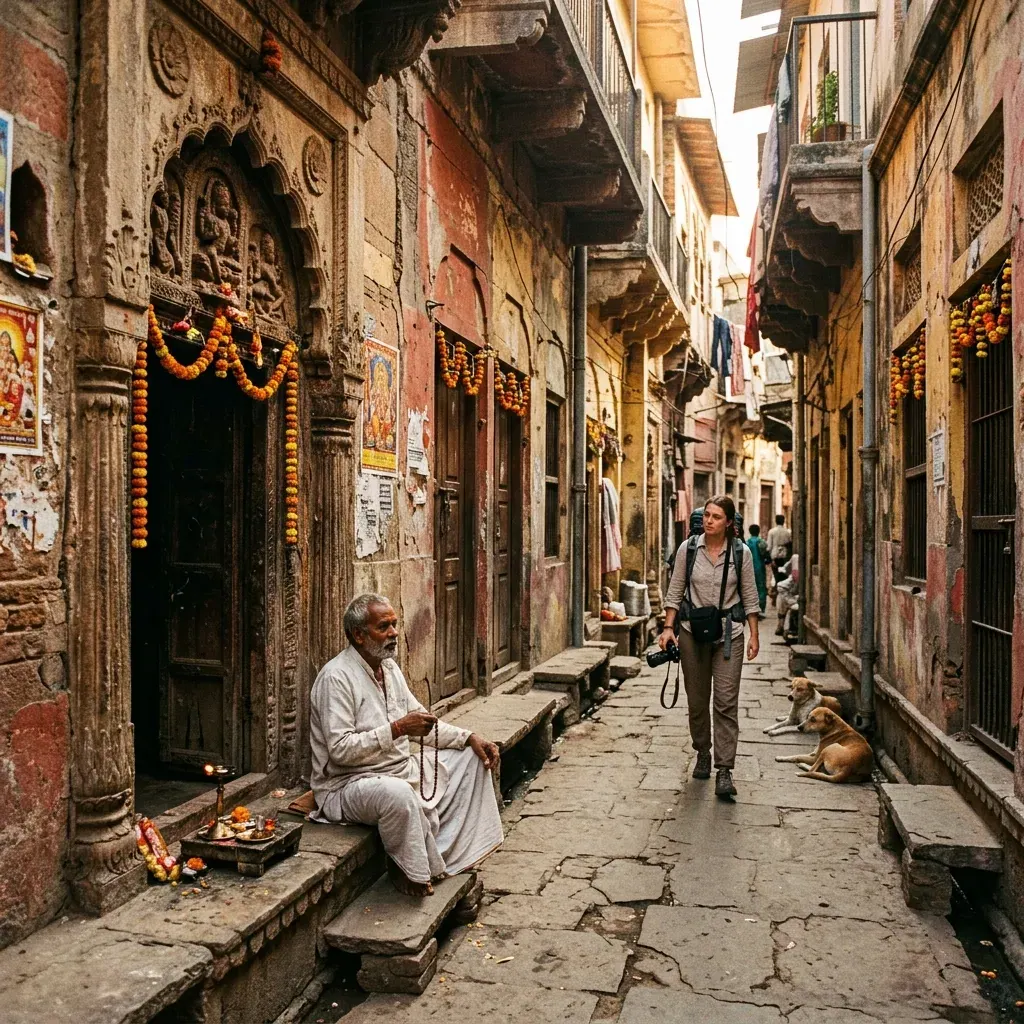
The alleys behind Hanuman Garhi and around Lata Chowk are where Ayodhya actually exists — handloom sari shops, chai stalls older than your grandparents, potters at their wheels, and the smell of marigolds from flower sellers who set up before sunrise. Walk slowly here. Let people approach you. The city's residents are extraordinarily warm.
6. Sarayu Boat Ride at Dawn
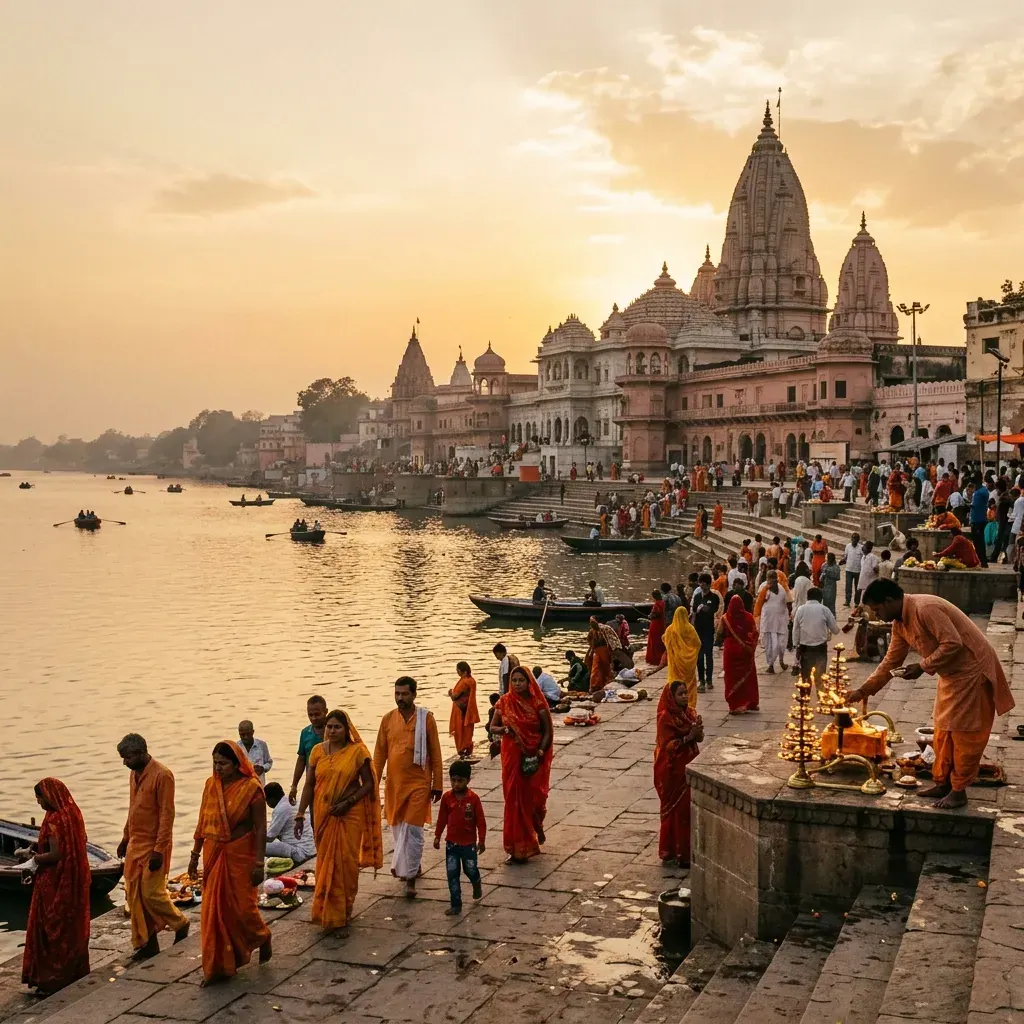
Hire a boat on the Sarayu at 6 AM and float downstream past the ghats as the city wakes. From the river, you see a different Ayodhya — the ghats lined with pilgrims, the temple shikharas catching the first light, and an almost Buddhist quietness on the water that contradicts everything happening on the banks. This is the Ayodhya most visitors never see.
7. Nageshwarnath Temple — Ancient and Overlooked
One of the few temples that survived the medieval periods of conquest and destruction in Ayodhya, the Nageshwarnath Temple is dedicated to Shiva and dates to the time of Kush, the son of Ram. It's architecturally modest but spiritually significant, and almost always uncrowded — a rare thing in this city.
8. Ayodhya's Food Walk — Kachori, Malpua & More
Ayodhya's street food scene is quietly extraordinary. The kachori at Ram Halwai near Hanuman Garhi, the malpua at the crossing by Lata Chowk, the kulfi at the old market — these are the foods that residents eat every day. We run a guided Ayodhya Food Walk from Ramta three mornings a week, departing at 8 AM with a local guide who knows every vendor by name.
9. Ram Ki Paidi Ghat — Evening Atmosphere
Ram Ki Paidi is the main bathing ghat on the Sarayu and is at its most spectacular in the evening. The walkway along the ghat, the oil lamps, the pilgrims, and the sound of the river create an atmosphere that is simultaneously ancient and immediate. Arrive an hour before sunset and simply sit.
10. Mani Parvat and Sugriv Parvat — The Forgotten Hillocks
Two small hillocks on the edge of the old city that very few tourists visit. Both are mentioned in the Valmiki Ramayana and carry their own temples and legends. The climb is short, the views are excellent, and the solitude is remarkable for a city this spiritually charged.
11. Guptar Ghat — Where Ram Took His Final Steps
Located about 12 kilometres from the city centre, Guptar Ghat is believed to be the spot where Lord Ram took jal samadhi — his final union with the Sarayu. It's deeply serene, lined with small temples, and dramatically undervisited. The drive itself, through the rural outskirts of Ayodhya, is worth it.
12. Craft Shopping — Wooden Toys and Block Print Textiles
Ayodhya has a centuries-old craft tradition of wooden toy making and block-print textile production. The best place to find authentic pieces is in the lanes around Ramkot — local artisan shops that sell directly without the tourist mark-up. At Ramta, we've curated a small selection of the block-print textiles used in our rooms — ask at the front desk.
"Ayodhya is the kind of city that doesn't announce itself. It waits. And when you finally slow down enough to listen, it tells you everything." — The Avarna Team, Ramta
Where to Stay in Ayodhya
If you're planning a visit to Ayodhya — whether for a day trip, a weekend, or a longer pilgrimage — Ramta by Avarna is the closest premium boutique hotel to Ram Janmabhoomi Mandir. We're a 1-minute walk from the temple gates, 1 minute from Ayodhya Junction Railway Station, and 20 minutes from the airport. Rooms starting from ₹4,000/night.
If you're planning a pilgrimage to Ayodhya, you already know the basics — Ram Mandir, Sarayu Ghat, aartis, prasad. What nobody tells you is the operational reality of a major pilgrimage city in 2025: the best times to avoid crowds, the logistics of darshan, the sacred sites that most pilgrims completely miss, and the small courtesies that make a difference.
This is the guide we wish existed when we first came to Ayodhya. It comes from people who live here, run a hotel a minute from the main temple, and speak with pilgrims every single day.
When to Visit Ayodhya
Ayodhya receives pilgrims year-round, but there are distinct seasons that significantly affect your experience:
October to March — The Best Season
The weather is cool and forgiving. The major festival period (October–November, Kartik month) brings enormous crowds but also the most spectacular atmosphere. If you want to combine comfortable weather with spiritual intensity, visit during Ram Navami (March/April) or Kartik Purnima (October/November).
Summer (April to June) — Manageable but Hot
Temperatures peak at 42–45°C. If you visit in summer, plan all outdoor activities before 9 AM and after 5 PM. The upside: crowds are significantly thinner, darshan lines are shorter, and the city has a quieter, more intimate character.
Monsoon (July to September) — The Hidden Season
Ayodhya in the monsoon is surprisingly beautiful — green, rain-washed, and uncrowded. The Sarayu fills dramatically. Many pilgrims avoid this season, which means you'll find the main sites nearly empty. The humidity is high, but the reward of a quiet Ram Mandir visit is considerable.
Ram Janmabhoomi Mandir — Darshan Guide
The Ram Janmabhoomi Mandir is both the spiritual and logistical centre of any Ayodhya visit. Here's what you need to know:
Entry Rules
Mobile phones are not permitted inside the main temple complex. Leave them at the designated storage counter (free of charge).
Bags, cameras, and food items are also not permitted. There are free bag storage facilities at the entry points.
Footwear must be removed at the designated area before the temple approach.
Dress modestly — shoulders and legs covered. Traditional attire (dhoti, saree, salwar kameez) is appreciated but not mandatory.
Best Darshan Times
The temple opens at 5:30 AM and closes at 10 PM. The Mangala Aarti at 5:30 AM is the most spiritually powerful — and also has the shortest lines. The midday session (12–4 PM) tends to have the longest waiting times. Evening aarti at 7 PM is beautiful but crowded.
✦ Avarna Tip
Stay at Ramta — we're a 1-minute walk from the temple gates. We serve breakfast from 5 AM on request so you can attend the Mangala Aarti and be back for a warm meal. This is the experience our guests consistently rate as the highlight of their Ayodhya visit.
Sacred Sites Beyond the Main Temple
A proper Ayodhya pilgrimage extends well beyond the Ram Janmabhoomi Mandir. The traditional Panchkosi Yatra — a 15-kilometre circuit around the sacred city — takes 2–3 days on foot and covers dozens of significant sites. Even if you're not undertaking the full yatra, these sites deserve a visit:
Kanak Bhavan — Sita's golden palace; deeply emotional atmosphere
Hanuman Garhi — 10th-century Hanuman temple on a hillock; essential
Nageshwarnath Temple — Ancient Shiva temple; one of the few to survive medieval invasions
Dashrath Mahal — Palace of King Dashrath, Ram's father; beautiful and often empty
Guptar Ghat — Believed location of Ram's jal samadhi; 12km from city centre
Sita Ki Rasoi — Sita's mythological kitchen; unique and atmospheric
What to Carry
For your Ayodhya pilgrimage, pack light but thoughtfully:
Comfortable walking shoes (you'll walk 5–10 km/day across temple precincts)
A cloth bag (plastic bags are restricted near temple areas)
Light cotton clothing in muted, modest colours
A small towel (for ghat visits and ablutions)
Cash in smaller denominations for prasad, flower offerings, boat rides
ORS/electrolyte packets if visiting in summer
Minimal valuables — the city is safe, but carry only what you need
Where to Stay Near Ram Janmabhoomi
The closest premium boutique hotel to Ram Janmabhoomi Mandir is Ramta by Avarna — 1 minute on foot from the main temple gate, 1 minute from Ayodhya Junction Railway Station. We are a contemporary property designed specifically for the modern pilgrim who wants aesthetic comfort without compromising on proximity to the sacred. It is the best pilgrim stay Ayodhya.
Rooms start at ₹4,000/night and include rooftop café access, a community lounge, and our proprietary Ayodhya city guide — the most detailed, locally written map of the city's sacred sites and hidden gems.
"Ayodhya has been receiving pilgrims for over 3,000 years. What's changed is only the infrastructure. The energy — the aarti bells, the river air, the evening chants — that has never changed." — From the Ramta Front Desk Journal
Ayodhya's food scene is one of the great undiscovered pleasures of North Indian travel. This is a city of morning rituals — kachori eaten standing at a street corner, malpua dipped in syrup, chai from a stall where the owner knows every regular by name. It's not sophisticated, it's not Instagrammable in the usual sense, and it's absolutely worth your full attention.
We've been running the Avarna Food Walk from Ramta for a year now. Here is everything we know.
The Essential Ayodhya Breakfast
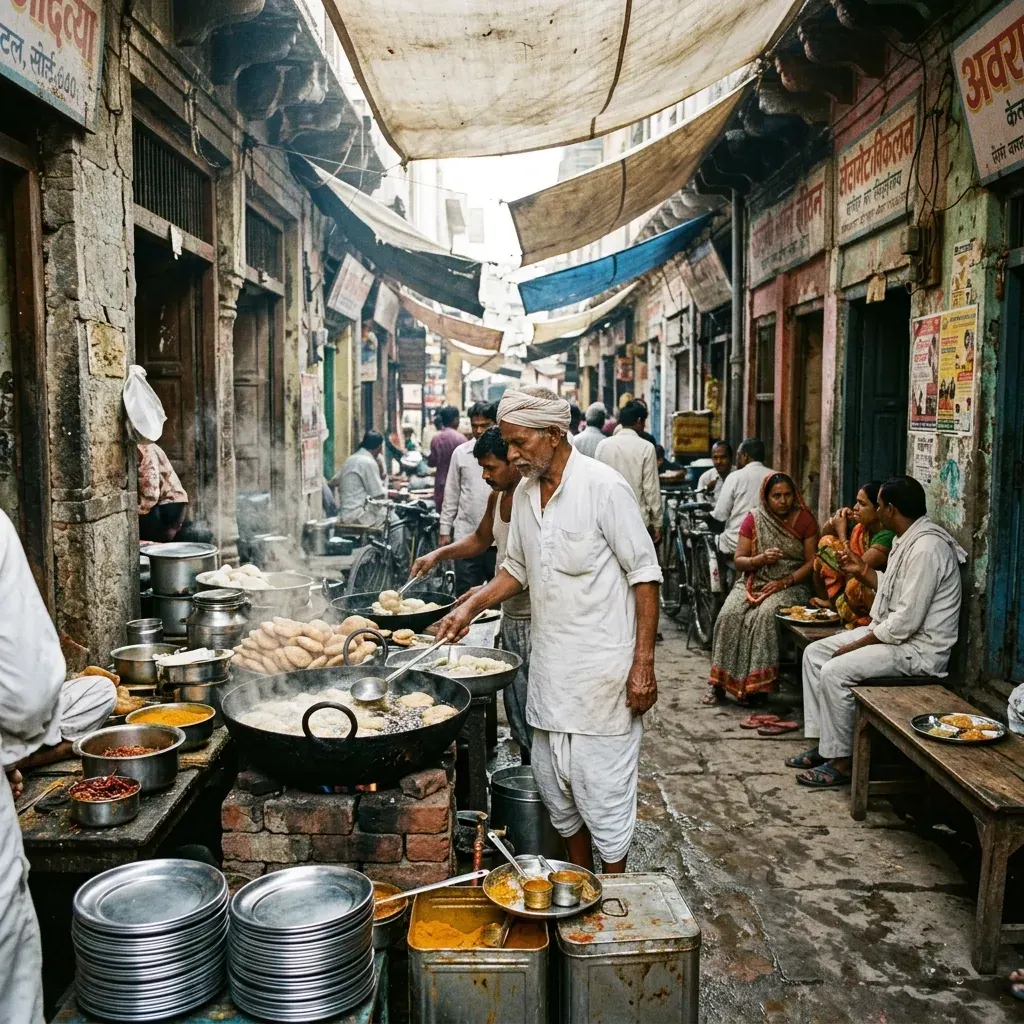
The Ayodhya breakfast circuit is a pilgrimage in its own right. Start at Ram Halwai near Hanuman Garhi, which has been selling kachori since before independence. The kachori here is fried golden, filled with spiced dal, and served with two sabzis and a chutney that has never changed. Arrive before 8 AM. By 9, the queue makes conversation difficult.
From there, walk to the malpua stall at the Lata Chowk crossing — about 8 minutes on foot. The malpua here is sweet, heavy, and perfect with the cup of barely sweetened chai they hand you without asking. This combination has been a morning ritual for Ayodhya residents for generations.
✦ Avarna Food Walk
We run a guided Ayodhya Food Walk three mornings a week (Tuesday, Thursday, Saturday), departing Ramta at 8 AM. Our guide — a local who grew up in the old city — takes you through 6 stops over 3 hours, including vendors not on any tourist map. Book at the front desk.
Where Locals Actually Eat
Thali Restaurants in the Old City
The best thalis in Ayodhya are in the lanes around Ramkot — the oldest part of the city, closest to the temples. These are small, no-menu establishments where a thali arrives (dal, two sabzis, roti, rice, achaar, papad) and refills are unlimited. Expect to pay ₹80–120 per person. The food is cooked fresh three times daily in enormous vessels on wood fires.
Jalebi and Puri — The Late Morning Ritual
Around 10 AM, the jalebi-puri stalls arrive at the main market near Hanuman Garhi. Freshly fried jalebis — crisp, syrupy, still warm — with puffed pooris and a thin potato subzi. This is the second breakfast of every Ayodhya resident. Don't skip it.
Street Chaat — Evening Only
As the evening cools (around 5 PM), the chaat stalls emerge near Ram Ki Paidi Ghat and the market areas. Pani puri, dahi bhalla, aloo chaat, and the Ayodhya-specific "tamatar chaat" — tomato-based, tangy, eaten with thin sev. The evening chaat circuit near the ghat is one of the most pleasurable ways to spend an hour in Ayodhya.
Sweets — An Ayodhya Speciality
Ayodhya has a deep tradition of sweet-making connected to temple prasad culture. The mithai shops near the Ram Mandir sell an extraordinary range — khoya barfi, peda (Ayodhya's peda is softer and less sweet than the Mathura variant), motichoor ladoo, and the local speciality: "Ram Peda," a golden, ghee-rich sweet offered as temple prasad.
Thakurprasad & Sons (Naya Ghat Road) — pedas and barfis; 70 years old
Gulab Ji Mithaiwala (Sadar Bazaar) — ladoos and gulab jamun; beloved local
Chai Culture
Ayodhya's chai culture deserves its own essay. The city runs on tea — milky, slightly sweet, cardamom-scented, served in clay kulhads that improve the taste in ways that are difficult to explain scientifically. The best chai in Ayodhya is not at any named establishment. It's the stall near your hotel at 6 AM, where the vendor arrives before sunrise and the first cup costs ₹12.
Dining at Ramta
Our rooftop café at Ramta serves a small, rotating menu of North Indian breakfast and café items — local dishes made thoughtfully, alongside speciality coffee, fresh juices, and our signature masala chai. The rooftop faces the temple skyline: breakfast here, with the sound of morning bells and the view of the city waking, is something our guests return for every morning of their stay. See our rooms and book a stay for the best stay in Ayodhya.
Two days in Ayodhya is the sweet spot — enough time to experience the spiritual depth of the city without rushing, but focused enough that you don't feel overwhelmed. This Ayodhya itinerary works equally well for pilgrims, families, couples on a weekend stay Ayodhya, and solo travellers who want a thoughtful, unhurried Ayodhya experience.
It's built around staying at Ramta by Avarna — our boutique hotel 1 minute from Ram Janmabhoomi Mandir — but the framework works regardless of where you stay.
Day 1 — Arrival, the Temple, and the River
Afternoon: Arrive & Settle
If you're taking the train, Ayodhya Junction Railway Station is a 1-minute walk from Ramta. Check in, rest briefly, and have lunch at our rooftop café or one of the thali restaurants in the lanes nearby. Don't plan anything strenuous for the first hour — Ayodhya's pace is different, and it takes a few minutes to adjust.
4 PM — Hanuman Garhi
Start with Hanuman Garhi. The 76-step climb in the cooler afternoon light is manageable, the views over the old city are excellent, and the temple itself is intensely atmospheric. Devotees here are singing, praying, and carrying enormous garlands — the energy is unlike any temple you've likely visited. Allow 45 minutes.
5:30 PM — Old City Walk
Walk slowly through the lanes of Ramkot — the oldest neighbourhood in Ayodhya, surrounding the temple complex. This is where the city lives: sweet shops, flower vendors, potters, old havelis with carved wooden doors. Take your time. Stop for chai. Let yourself get slightly lost — the lanes are safe, and someone will always help you find your way.
7 PM — Ram Ki Paidi Ghat at Dusk
Walk to Ram Ki Paidi Ghat as the sun goes down. The evening aarti here is smaller than the Sarayu main aarti but deeply beautiful — oil lamps, flower offerings, the sound of conches and bells carrying across the water. Sit on the ghat steps and simply watch. This is Ayodhya at its most elemental.
Evening — Dinner & Rest
Return to Ramta for dinner. Our café serves until 10 PM. Tomorrow starts early — be in bed by 10.
✦ Day 1 Avarna Tip
If you arrive in the morning, visit Ram Janmabhoomi Mandir on Day 1 afternoon instead of the evening ghat, and shift the ghat visit to Day 2 morning after the aarti. The temple is stunning in afternoon light and less crowded than in the morning.
Day 2 — Aarti at Dawn, Temple, Food Walk & Departure
5 AM — Sarayu Sunrise Aarti
Set an alarm. This is non-negotiable. Wake before 5, dress quickly, and walk to the Sarayu Ghat. The Sarayu Sunrise Aarti begins precisely at sunrise — brass lamps, Sanskrit chants, flower offerings on the water, and the reflection of fire on the river as the sky changes colour. Every guest who has done this with us has called it the most powerful experience of their Ayodhya visit.
We run a guided Sarayu Aarti experience departing Ramta at 5 AM — our guide ensures you reach the best vantage point, explains the ritual's meaning, and has chai ready when you return at 7 AM.
7 AM — Rooftop Breakfast at Ramta
Return for breakfast on our rooftop, with the Ram Mandir shikhara in the background. This is the moment to simply sit with a cup of chai and let the previous 48 hours settle into you.
8:30 AM — Ram Janmabhoomi Mandir Darshan
This is the window for comfortable darshan — after the morning rush peaks at 7 AM, the line moves relatively smoothly at 8:30. Leave your phone and bags at the storage counter (free). The inner sanctum — the Garbha Griha — is intimate, emotionally charged, and architecturally extraordinary. Give yourself at least an hour inside the entire complex.
10:30 AM — Kanak Bhavan & Quick Lunch
Walk to Kanak Bhavan — 10 minutes from the main temple. This is the temple that first-time visitors consistently say they wished they had more time for. After Kanak Bhavan, walk to Ram Halwai for a final kachori breakfast / early lunch before your departure.
12 PM — Departure
Check out and make your way to the railway station or airport. The complete 2-day Ayodhya experience has covered: the river, the temples, the food, the lanes, the aarti, the architecture — and the ineffable thing that Ayodhya does to you when you stay long enough to let it.
Family Trip Notes
With children under 12, the schedule above works with small adjustments: skip the 5 AM aarti on Day 2 (replace with a 7 AM ghat walk), and build in more food stops — Ayodhya's street food is universally beloved by children. The wooden toy shops in the old city lanes are an excellent stop for kids.
Where to Stay
Ramta by Avarna is the best boutique hotel for this itinerary — we're 1 minute from every significant starting point. Rooms from ₹4,000/night. We offer all the experiences mentioned in this guide (Sarayu Aarti, Food Walk, Heritage Trail) as bookable add-ons to your stay. Check availability and book direct for the best rates.
Every year, in the days around Diwali, Ayodhya transforms into what's widely considered one of the most spectacular festivals of light anywhere in the world. Millions of earthen diyas are lit along the banks of the Sarayu River and across dozens of ghats, recreating the moment described in the Ramayana when the city welcomed Lord Ram home after fourteen years of exile.
Since the Ram Mandir's consecration in January 2024, Deepotsav has taken on even deeper significance — for the first time in five centuries, the celebration now includes Lord Ram physically present in his own birthplace temple. If you're planning to experience it in person, here's everything you need to know.
When Is Deepotsav 2026?
Deepotsav 2026 is expected to take place [CONFIRM: around November 7–8, 2026], aligning with Diwali. The Uttar Pradesh government typically confirms the exact date and full schedule only a few weeks ahead of the event, so it's worth checking official sources closer to your travel dates. What is certain is the general window: expect celebrations to build over several days, with the main lighting ceremony falling on the core festival night.
What Makes Deepotsav 2026 Special
Each year, Ayodhya has pushed to break its own record for the number of diyas lit simultaneously. In 2025, the city lit close to 26 lakh (2.6 million) diyas across 56 ghats and secured a Guinness World Record, with over 2,100 Vedic scholars performing a synchronized aarti on the riverbank. Early indications suggest 2026 aims to surpass that scale.
Beyond the diya-lighting itself, expect:
Drone and laser shows depicting scenes from the Ramayana over the Sarayu River
Traditional Ram Leela performances staged throughout the city
Cultural processions (Shobha Yatra) featuring tableaux based on the Ramayana's chapters
A symbolic re-enactment of Lord Ram's return, traditionally performed with a helicopter representing the Pushpaka Vimana
A newly built wax museum and expanded exhibition spaces in recent years
Best Time to Arrive at Ram Ki Paidi
Ram Ki Paidi is the epicenter of the celebration and also the most crowded spot in the city during Deepotsav. To get a good vantage point for the diya-lighting and avoid the worst of the crowd crush, plan to arrive by 5:00–5:30 PM, well before the ceremony begins around sunset.
A few practical notes for first-time visitors:
Parking near Ram Ki Paidi is extremely limited — plan to walk the last stretch or use local e-rickshaws
If traveling with elderly family members, arrive early and avoid the peak crowd window; seating is limited, so bring a lightweight stool or walking aid if needed
Free e-passes for certain viewing areas are typically released roughly two months ahead via the UP Tourism Department's website — worth registering as soon as it opens
Where to Stay During Deepotsav
Because Deepotsav draws visitors from across India and abroad, accommodation near Ram Mandir fills up fast — many properties recommend booking two to three months in advance. Staying within walking distance of Ram Ki Paidi and Ram Janmabhoomi matters more during Deepotsav than almost any other time of year, simply because road access gets heavily restricted and vehicle movement near the ghats slows to a crawl as crowds build.
✦ Stay with Avarna
Ramta by Avarna sits a one-minute walk from both Ram Janmabhoomi Mandir and Ayodhya Junction Railway Station — during a festival where every extra kilometer of traffic can cost you an hour, that proximity is the difference between watching the lighting ceremony comfortably and missing it in gridlock. Our rooftop café also offers a quieter, elevated view of the temple skyline for anyone who prefers to experience the festival's glow without joining the densest crowds at the ghats directly.
Beyond the Main Event: What Else to See
If you're staying multiple days around Deepotsav, don't limit the trip to Ram Ki Paidi alone:
Hanuman Garhi and Kanak Bhavan are typically decorated for the occasion and worth visiting in daylight hours when crowds are thinner
The Sarayu Aarti, held nightly along the ghats, takes on extra scale during festival week
Early mornings before the evening crowds build are the best window for temple visits and a quieter walk through the old city lanes
Planning Your Trip
Book accommodation early — ideally 2-3 months ahead for Deepotsav specifically
Expect queues of several hours at major temples during peak festival days
Dress modestly and be prepared to remove footwear and store phones/bags at temple entry points
Carry cash in small denominations, as many local vendors near the ghats don't accept cards
Frequently Asked Questions
When is Ayodhya Deepotsav 2026?
Deepotsav 2026 is expected around early-to-mid November 2026, aligning with Diwali. The exact date is confirmed by the Uttar Pradesh government closer to the event — check official sources a few weeks ahead of your trip for the final schedule.
What time should I arrive at Ram Ki Paidi for the diya lighting?
Arrive by 5:00–5:30 PM to secure a good viewing spot before the lighting ceremony begins around sunset. Arriving earlier significantly improves your view and comfort, since the area gets extremely crowded as the evening progresses.
How far in advance should I book a hotel for Deepotsav?
Most travelers book accommodation near Ram Mandir two to three months ahead of Deepotsav, since the city's limited hotel capacity fills quickly for this event.
Is Deepotsav suitable for elderly visitors?
Yes, but elderly visitors should arrive early, avoid the peak crowd window right before the lighting ceremony, and bring a walking aid if needed, since seating near Ram Ki Paidi is limited.
What else happens during Deepotsav besides the diya lighting?
Deepotsav includes drone and laser shows depicting Ramayana scenes, traditional Ram Leela performances across the city, cultural processions, and a symbolic re-enactment of Lord Ram's return to Ayodhya.
Where is the best place to stay for Deepotsav given the crowds and road restrictions?
Staying within walking distance of Ram Janmabhoomi and Ram Ki Paidi matters significantly during Deepotsav, since vehicle access near the ghats becomes heavily restricted. Ramta by Avarna is a one-minute walk from both the temple and Ayodhya Junction Railway Station.
Ready to plan your trip? Start mapping out your Deepotsav experience today.