



 Destinations
From Ram Mandir darshan to hidden chai spots and sunrise aartis on the Sarayu — the complete guide to the 15 best things to do in Ayodhya in 2027.
Ayodhya has changed more in the last three years than in the previous three decades. The opening of Ram Janmabhoomi Mandir in January 2024 transformed a quiet pilgrimage town into one of India's most visited cities — drawing over a lakh visitors on peak days. Yet beneath the new flyovers and construction, the old Ayodhya persists: the ghats at dawn, the kachori alleys, the small temples where nobody is rushing.
This is a guide to the 15 best things to do in Ayodhya — from the essential (Ram Janmabhoomi darshan) to what most visitors miss entirely (Guptar Ghat, the Sarayu boat crossing at sunrise, the lane behind Kanak Bhavan at 7am). It is written for first-time visitors and return pilgrims alike, with practical timings, prices, and tips that most guides skip.
1. Ram Janmabhoomi Mandir Darshan
The centrepiece of any Ayodhya visit — and one of the most significant Hindu temples built in modern India. Ram Janmabhoomi Mandir stands on the site believed to be the birthplace of Lord Ram and took nearly 30 years of legal proceedings and 5 years of construction before its consecration in January 2024. The main sanctum houses a black stone idol of Ram Lalla — Ram as a 5-year-old child — and is surrounded by 44 smaller shrines spread across a 70-acre complex.
Darshan Timings & Queue Tips
The temple is open daily from 6:00am to 10:00pm. Queues are shortest between 6:00am–7:30am and after 8:00pm. Avoid Saturdays, Sundays, and all major festival dates — waiting times on these days can stretch to 4–6 hours.
Entry is free. No advance booking is needed for general darshan. VIP passes are available through the temple trust's official website for a nominal fee.
What to Carry — and What to Leave Behind
Mobile phones and cameras are not permitted inside the sanctum sanctorum. Shoes must be removed at the counter near the entrance (storage is free). Dress modestly — covered shoulders and legs for both men and women. In summer, the marble compound gets extremely hot; visit before 9am or after 6pm. Carry a small water bottle; free drinking water is available at multiple points inside the complex.
2. Sarayu Ghat — Sunrise Aarti at Ram Ki Paidi
Ram Ki Paidi is Ayodhya's most sacred ghat — 28 broad steps descending to the Sarayu river, where pilgrims take a ritual bath before temple darshan. The Sarayu is believed to purify the soul before one enters Ram Janmabhoomi.
The morning aarti begins around 5:30am. Priests chant on flower-decorated platforms as hundreds of small oil lamps float on the river's surface. This is not a staged tourist event — it has taken place every morning for centuries. Arrive 20 minutes early to find a spot close to the water.
Even if you are not religious, it is one of the most visually extraordinary things you will see in India. The combination of rising mist, lamplight, and the sound of conch shells on the Sarayu is irreplaceable.
3. Kanak Bhavan Temple
A 10-minute walk from Ram Janmabhoomi, Kanak Bhavan is traditionally considered the golden palace gifted to Sita by Kaikeyi on the morning after her wedding. The temple built on this site (constructed in 1891) is richly painted and gilt, housing life-size marble statues of Ram and Sita in elaborate ornaments that are changed daily.
Opening hours: 8:00am–12:00pm and 4:00pm–9:00pm. Kanak Bhavan is significantly less crowded than the main mandir and allows a far more contemplative visit. The evening aarti here (around 7:30pm) is particularly atmospheric — small, unhurried, and surprisingly moving.
4. Hanuman Garhi — Ayodhya's Best Viewpoint
Hanuman Garhi is a fortress-temple dedicated to Hanuman in his role as the eternal guardian of Ayodhya. It sits atop a hillock in the heart of the old city, accessed via 76 steep steps. The temple itself is worth visiting — but the main reason to climb is the panoramic view across Ayodhya's rooftops to the Sarayu river and the illuminated spires of Ram Janmabhoomi.
Visit at sunset (5:30pm–6:00pm) for the best light. The climb takes about 10 minutes; the view will keep you there longer.
5. Boat Ride on the Sarayu River
One of the most underrated things to do in Ayodhya is to view the city from the river itself. Hire a small wooden rowing boat from Ram Ki Paidi for a 45-minute ride along the Sarayu. Cost: ₹200–₹400 for a private boat. The boatmen have been plying this route for generations and will point out ghats and temples that you wouldn't notice from the bank.
Best time: 6:30am–8:30am (after the aarti, before the heat) or 4:30pm–6:00pm (golden hour light on the ghats). Avoid midday in summer.
6. The Old City Food Walk
Ayodhya's food culture is entirely vegetarian, deeply local, and genuinely extraordinary. The lanes around Hanuman Garhi, Ram Janmabhoomi, and Kanak Bhavan have food stalls that have been feeding pilgrims for generations. No restaurant in the city serves food as good as what comes out of these lanes.
The circuit:
- Ram Halwai (open from 7:00am) — kachori-sabzi breakfast, closes when sold out (usually by 10am)
- Hanuman Garhi crossing — malpua with rabri, served hot from the kadhai
- Ram Ki Paidi second steps — kulhad chai, thick and heavily spiced
- Sita Ram Pedewale near Kanak Bhavan — the city's best peda, made by the same family for four generations
Budget for the full circuit: ₹100–₹200.
7. Nageshwarnath Temple
One of the oldest temples in Ayodhya, Nageshwarnath is a Shiv mandir near the Sarayu riverbank. Legend holds it was established by Kush, son of Ram, to honour Lord Shiva. The temple is quieter than the major pilgrimage sites — worth 20–30 minutes even if you are primarily visiting the Vaishnav temples. It is particularly significant during Maha Shivratri, when it hosts large overnight gatherings.
8. Guptar Ghat — Ayodhya's Most Sacred, Least Crowded Spot
Guptar Ghat sits downstream from Ram Ki Paidi and is considered among the holiest sites in all of Ayodhya. This is where Lord Ram is said to have taken jal samadhi — entered the Sarayu for his final departure from the mortal world. The ghat is lined with small temples and has a contemplative atmosphere almost entirely absent from the crowded main ghats.
Most Ayodhya tour packages skip Guptar Ghat. That is precisely why it is worth visiting. Reach it by boat from Ram Ki Paidi — the river crossing takes about 20 minutes and is an experience in itself.
9. Tulsi Smarak Bhavan
A museum dedicated to Goswami Tulsidas — the 16th-century poet-saint who composed the Ramcharitmanas, the most widely read text in the Hindi-speaking world. The museum has well-designed galleries on the Ramayana tradition, the life of Tulsidas, manuscripts, and the history of Ram bhakti.
Entry is free. The building is air-conditioned — a welcome break if you are visiting between April and June. Allow 60–90 minutes. It is one of the best places in Ayodhya to understand the city's literary and devotional heritage in depth.
10. The Panch Koshi Parikrama
A 15-kilometre circumambulation of Ayodhya passing through 12 major temples and ghats. One of the oldest pilgrimage practices in the city, believed to confer the spiritual merit of visiting every sacred site in Ayodhya. Most pilgrims complete it over two days; the more devout do it in a single pre-dawn-to-dusk walk.
The route passes through Kanak Bhavan, Swargadwar Ghat, Nageshwarnath, Guptar Ghat, Mani Parvat, Dashrath Mahal, and several smaller shrines. No guide is strictly necessary — the path is well-marked — but hiring a local guide (₹300–₹500) adds considerable depth to what you encounter along the way.
11. Dashrath Mahal
The traditional site of King Dashrath's palace contains a walled compound with several temples and a small museum. It is one of the quieter major sites in Ayodhya and gives a sense of the city's layered, pre-modern history. The murals inside the main hall — depicting scenes from the Ramayana — are well-preserved and worth studying closely.
12. Mani Parvat
A small hill near the Sarayu with a temple at its summit. Mani Parvat is associated with the Ramayana narrative and offers a good river view, though less expansive than from Hanuman Garhi. The climb is gentle (5 minutes). Best combined with a visit to Guptar Ghat as part of a half-day river walk.
13. Ram Katha Park & Ayodhya Museum
The renovated Ram Katha Park near the Sarayu riverfront has a museum with artefacts, dioramas, and maps tracing Ayodhya's history. Well-lit, bilingual (Hindi and English), and free to enter. It is a good orientation point before exploring the rest of the city — visit it on Day 1 if possible.
14. The Evening Aarti at Ram Ki Paidi
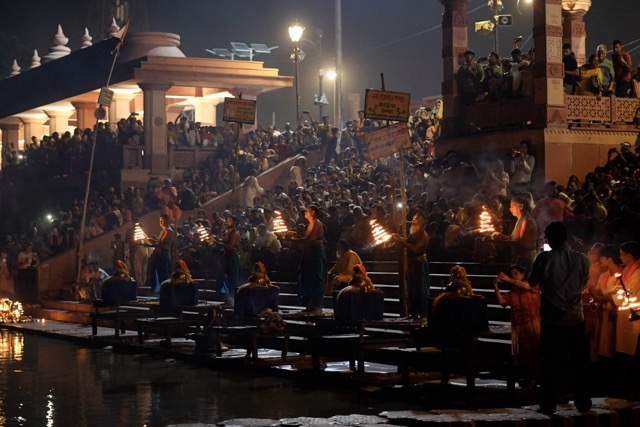
The Sandhya Aarti at Ram Ki Paidi is more elaborate than the morning ceremony. Dozens of large brass lamps are lit simultaneously and carried to the river's edge as priests chant and conch shells sound across the water. The best spots are on the steps closest to the water — arrive at least 30 minutes before sunset.
The combined visual of the illuminated Ram Janmabhoomi spires behind the ghat, the aarti flames reflected in the Sarayu, and the darkening sky is one of Ayodhya's defining images. It is free, public, and happens every single evening.
15. Rooftop Dinner with a View of Ram Janmabhoomi
End your day on the rooftop terrace at Ramta by Avarna — a one-minute walk from Ram Janmabhoomi's entrance gate. The views of the illuminated temple complex at night are unmatched from anywhere else in the city. The menu is rooted in Avadhi cuisine: slow-cooked dum preparations, whole spices, and seasonal produce. The dal makhani and paneer lababdar are menu staples worth ordering.
Ramta is the closest boutique hotel to Ram Janmabhoomi in Ayodhya, which makes the rooftop the best vantage point for watching the nightly illumination of the temple. Book a table in advance — tables fill after 8pm.
Planning Your Ayodhya Visit
Best Time to Visit Ayodhya
October to March is the best time. Temperatures are pleasant (15–28°C), the winter pilgrimage season is in full swing, and major festivals like Deepotsav (Diwali) and Ram Navami fall in this window. Avoid May and June — peak summer temperatures exceed 45°C and the marble ghats are extremely difficult to walk on barefoot.
How to Reach Ayodhya
By air: Maharishi Valmiki International Airport (AYJ) has direct flights from Delhi, Mumbai, and Bengaluru. Taxis to the city centre take 15–20 minutes.
By train: Ayodhya Dham Junction (AYDH) is the main railway station, well-connected from Lucknow (90 minutes), Varanasi (3.5 hours), and Delhi (8 hours by overnight train).
By road: 130km from Lucknow (2.5 hours) and 200km from Varanasi (4 hours) via expressways.
How Many Days Do You Need in Ayodhya?
- 1 day (day trip from Lucknow/Varanasi): Ram Janmabhoomi, Ram Ki Paidi, Hanuman Garhi
- 2 days (ideal first visit): All of the above + Kanak Bhavan, Sarayu boat ride, full food walk, evening aarti
- 3 days (recommended): Everything above + Guptar Ghat, Tulsi Smarak Bhavan, Panch Koshi Parikrama
Where to Stay Near Ram Janmabhoomi
Proximity matters enormously — especially for the 5:30am morning aarti. Ramta by Avarna is located a one-minute walk from Ram Janmabhoomi's entrance gate, the closest boutique hotel to the temple. Rooms from ₹4,000/night; rooftop café; elevator; complimentary darshan timing assistance. Book 2–3 weeks ahead during peak season (October–March).
Frequently Asked Questions — Things To Do in Ayodhya
What is the most famous thing to do in Ayodhya? Ram Janmabhoomi Mandir darshan is the primary draw. Beyond that, the Sarayu Ghat morning aarti and the Panch Koshi Parikrama are considered the most spiritually significant experiences in the city.
Is Ayodhya worth visiting in 2027? Yes — particularly if you haven't visited since before January 2024. The opening of Ram Janmabhoomi Mandir has dramatically transformed the city's infrastructure: new roads, improved airport connectivity, better hotels, and a renovated riverfront. The ancient soul of the city remains intact, but it is now far more accessible.
Is Ayodhya safe for solo female travellers? Ayodhya is considered one of the safer pilgrimage cities in Uttar Pradesh. The heavy security presence around the main temple complex extends to the surrounding streets. Exercise standard urban precautions. The city has a respectful, devotion-focused atmosphere that most solo travellers find non-threatening.
What is the entry fee for Ram Mandir? Ram Janmabhoomi Mandir has no entry fee. General darshan is free and no advance booking is required. Online registration is available on the temple trust's official website for specific time-slot darshan.
Can I visit Ayodhya in one day? Yes, as a day trip from Lucknow or Varanasi. A focused one-day itinerary covers Ram Janmabhoomi, Ram Ki Paidi, Kanak Bhavan, and Hanuman Garhi. Start early — arrive by 7am — to avoid the worst of the crowds and heat.
Ramta by Avarna is a boutique hotel located three minute from Ram Janmabhoomi Mandir, Ayodhya. Book a stay at stayavarna.com